Temporary crown bridge material is used to fabricate provisional restorations during indirect dental procedures. Dentists rely on these materials to protect prepared teeth, maintain occlusion, and preserve esthetics while definitive restorations are fabricated.
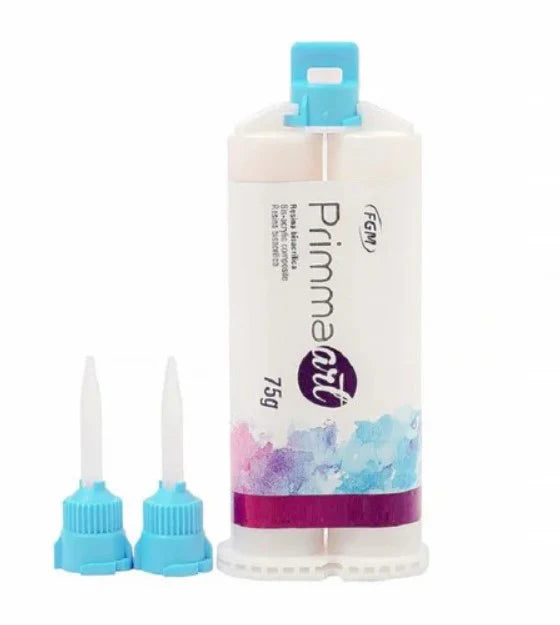
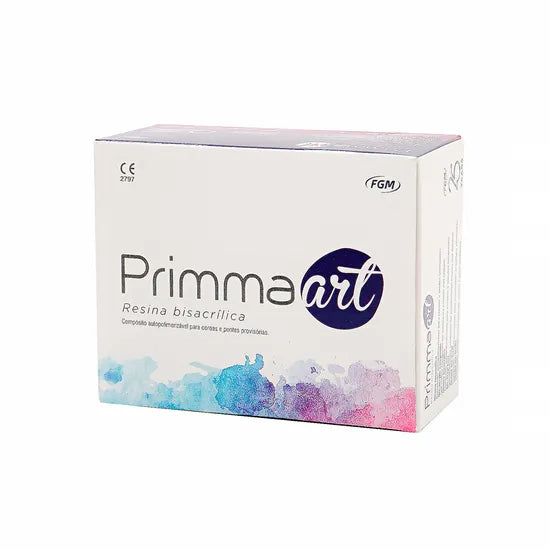
Primma Art by FGM is a self-curing provisional material developed to provide strength, shade stability, and accurate detail reproduction. Its balanced formulation supports predictable handling and consistent clinical results for short- and long-term provisional use.
Temporary Crown and Bridge Material Key Features
High mechanical strength with resistance to fracture and wear
Shade fidelity aligned with the Vita shade guide
Improved shade stability due to reduced inhibited layer formation
Low heat release for patient comfort and safe use on vital teeth
Controlled viscosity with rheological effect for precise detail reproduction
Balanced monomer formulation for optimal working time and easy removal during the elastic phase
Temporary Crown and Bridge Material Clinical Benefits
This material allows clinicians to fabricate provisional crowns and bridges that maintain function and esthetics throughout the treatment phase. As a result, patients experience improved comfort and restoration stability.
In addition, the low exothermic reaction supports safer use on vital teeth, while stable shade behavior ensures predictable esthetic outcomes in anterior and posterior regions.
Recommended Clinical Applications
Dentists commonly use this material for:
Provisional crowns and bridges
Inlays, onlays, and veneers
Long-term provisional restorations
Refilling prefabricated composite, polycarbonate, or metal provisionals
Esthetic mock-ups
Step-by-Step Usage Guidelines
Isolate the prepared area using Vaseline or a similar lubricant.
Attach the self-mixing tip to the cartridge.
Dispense a small amount of material into a container before application to ensure proper homogenization.
Apply the material into the mold, starting from the occlusal or incisal area and moving toward the cervical area. Keep the mixing tip immersed in the material to prevent air entrapment.
Seat the mold onto the prepared teeth within 40 seconds after starting the mix and maintain its position.
Remove the mold during the elastic phase, approximately 2–3 minutes after mixing begins.
Allow complete polymerization for about 5 minutes. Remove the provisional restoration and clean the surface with alcohol to eliminate the oxygen-inhibited layer.
Perform adjustments if required using fine or extra-fine diamond burs. Finish and polish with rubber points, abrasive disks, felt disks, and polishing paste as needed.
Cement the provisional restoration using a temporary eugenol-free cement.